
Best Paint for Indian Homes and Industries: How to Choose the Right Paint
Choosing the right paint is more than just selecting a colour. Learn which paint suits Indian homes, metal gates and grills, and industrial machinery, and how climate and surface preparation decide how long it lasts.
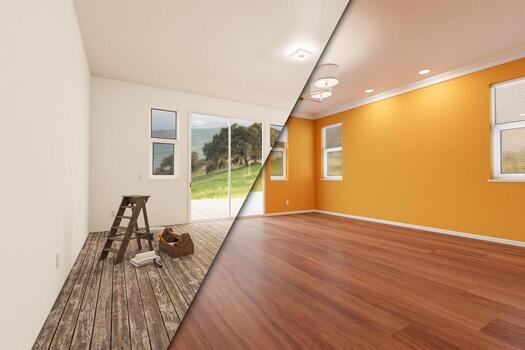
Choosing the right paint is more than just selecting a colour. Whether you are painting your home, protecting metal gates, coating industrial machinery, or finishing fabricated steel structures, the right paint can improve appearance, durability, and long-term value.
In India, changing weather conditions, dust, humidity, heat, and monsoon rains can affect paint performance. That is why choosing the right paint for the right surface is essential.
At Aeropolish Paints & Coating Industry, we believe that better painting decisions start with the right product knowledge. This guide explains which paint suits which surface, what to look for before you buy and how to get a finish that lasts.
1. Which paint is best for Indian homes?
Walls make up most of the painted area in a home, and they are of two kinds: interior walls that need a clean, comfortable finish, and exterior walls that must fight the weather. Each needs a paint made for its own conditions.
For most houses, water-based emulsion paints are the first choice. They dry quickly, have a mild smell, are easy to apply and clean up with water, and are available in a wide range of colours and finishes, from soft matt to sheen.
Water-based emulsion paint
Water-based emulsion paints are commonly used on interior and exterior walls. They are available in different finishes and are generally easy to apply and clean up.
They are a good fit when you want:
- A wide choice of shades and finishes for living rooms, bedrooms and dining areas.
- A paint that dries fast so the room can be used again soon.
- Easy tool cleaning with plain water.
- Lower odour compared to solvent-based paints.
For interior walls, pick a finish according to the room: matt for bedrooms and living rooms, and a washable sheen for kitchens, children's rooms and corridors.
Exterior paint
Exterior paints are designed for outdoor walls exposed to sunlight, rain, and environmental conditions. Always choose a product suitable for the specific surface and exposure.
When choosing exterior paint, look for:
- Good resistance to sunlight, so that the colour does not fade quickly.
- Water repellence, so that rain does not soak into the wall.
- Protection against algae and fungus in damp and shaded areas.
- Flexibility to cope with small movements and hairline cracks.
Never use an interior paint on outside walls. It is not built for sun and rain and usually fades, chalks or peels early.
2. Which paint is best for metal gates, grills and fabrication work?
Metal surfaces need protection against corrosion, weather exposure, and everyday wear.
For metal gates, railings, fabrication structures, and selected industrial applications, synthetic enamel paint is a popular option. It forms a hard, glossy film that is easy to clean and gives steel a smart, finished look.
What to check when selecting synthetic enamel
When selecting synthetic enamel, consider:
- Gloss and surface finish.
- Adhesion to the prepared surface.
- Drying time under recommended conditions.
- Coverage and application method.
- Resistance to the expected environmental conditions.
- Compatibility with the primer.
For better results, remove rust, oil, dust, and loose coatings before painting. Apply a compatible primer wherever required and follow the product's recommended application instructions.
Why rust removal and primer matter
Paint applied over rust does not stop the rust. The corrosion keeps spreading under the film and pushes the paint off in flakes. Clean the metal down to a sound surface with a wire brush or sandpaper, wipe off oil and grease, and apply a suitable primer before the enamel.
Apply thin, even coats and allow each coat to dry as recommended. Two thin coats always perform better than one heavy coat, which can sag, run or stay soft.
3. What about industrial machinery and steel structures?
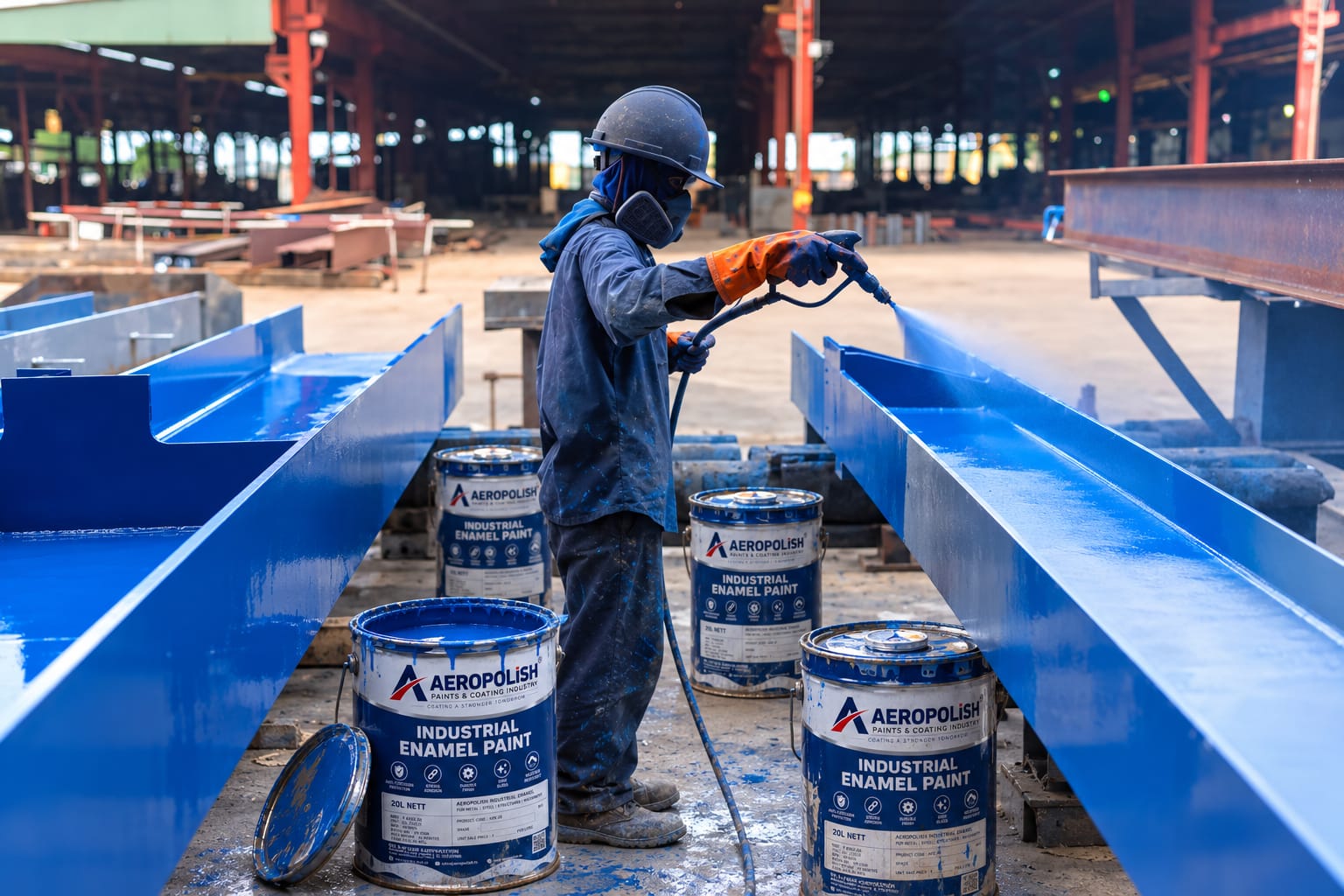
Industrial environments are far tougher than a home. Machinery, tanks, pipelines, structural steel and plant equipment face heavy wear, chemicals, moisture, heat and constant vibration. A normal wall paint will not survive for long here.
Industrial coatings are engineered for these conditions, and they are usually applied as a system: surface preparation, a primer, and one or more topcoats that match the working environment. The right system depends on what the surface is exposed to, for example outdoor weather, indoor dry areas, humidity, oils or chemicals.
Always follow the technical data sheet for the product, and use the thinner made for that coating system. Our blog on thinners explains why the wrong thinner can spoil an otherwise good job.
4. How Indian weather affects paint performance
India's climate is hard on paint. Strong sunlight fades colours and breaks down binders. Heavy monsoon rain and humidity push moisture into walls and encourage algae and fungus. Hot summers and cooler nights make surfaces expand and contract, which can open cracks. Dust and pollution in cities dull the finish.
Choosing a product made for these conditions, and painting in dry, mild weather, makes a big difference to how long the paint looks good.
5. Surface preparation decides how long paint lasts
Even the best paint fails on a poorly prepared surface. Whatever you are painting:
- Clean the surface of dust, dirt, grease and loose material.
- Repair cracks, holes and damaged plaster, and sand smooth.
- Treat damp, fungus and rust before painting.
- Apply a compatible primer.
- Paint only when the surface is completely dry.
Time spent on preparation is the cheapest way to extend the life of any paint job.
Quick answers
Which paint is best for home walls? A water-based emulsion in a finish that suits the room, and an exterior-grade product for outside walls.
Which paint is best for gates and grills? Synthetic enamel on a rust-free, primed surface.
Which paint is best for industrial equipment? An industrial coating system chosen for the exposure, applied as per its data sheet.
Can I use interior paint outside? No. Always use a paint made for the surface and exposure.
Do I need a primer? In most cases, yes. It improves adhesion, evens the surface and helps the topcoat last longer.
Choose the right paint with confidence
The best paint is the one that suits the surface, the environment and the way the space is used. Understand the surface, prepare it well, choose a compatible system and follow the application instructions.
If you are unsure which Aeropolish product to use for your home, gate or industrial project, our team will be happy to guide you.